
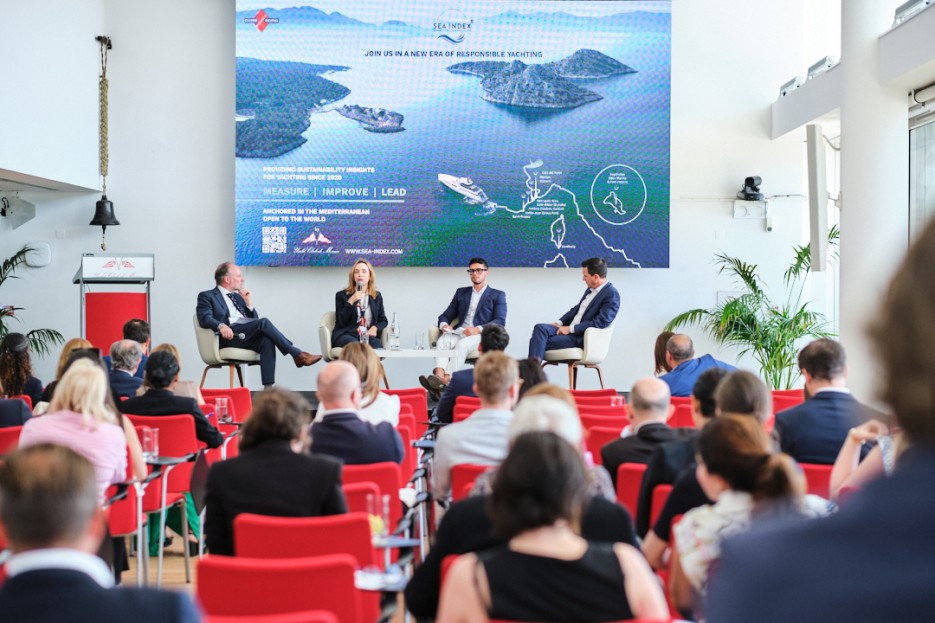
Monaco’s yachting industry gathered at the Yacht Club de Monaco on 15 May for the 2025 Spring Pop-Up, an event hosted by the Cluster ‘Yachting Monaco’ with a clear focus on environmental responsibility, energy efficiency, and the regulatory future of recreational vessels.
The gathering united shipyards, yacht owners, naval architects, suppliers, and regulatory authorities in a concentrated effort to advance sustainable practices in yachting, aligning with the European Union’s tightening environmental regulations. The agenda revolved around three key roundtable discussions exploring cross-sector innovation, ownership priorities, and sustainable refits.
The opening session assessed technological contributions from adjacent industries. Projects such as the Orient Express Corinthian—billed as the world’s largest sailing yacht—and JIFMAR GROUP’s hybrid cargo vessel demonstrated how innovation can lead to substantial fuel savings and lower emissions. Participants emphasised that while yachting accounts for only 0.3% of maritime emissions globally, regulation remains inevitable, with new European classifications requiring vessels to meet energy labelling standards.
A second panel shifted focus to the owner’s perspective, highlighting operational challenges and design preferences. Emphasis was placed on self-sufficiency, multifunctional space usage, and the logistical complications posed by rotating crews. Owners voiced concerns over standardisation in yacht design and called for more versatile onboard solutions tailored to extended voyages and varied use.
The final session turned to the question of retrofitting the existing fleet. Experts presented tangible gains achievable through relatively modest upgrades, such as replacing halogen bulbs with LED alternatives and optimising onboard energy systems. With around 70% of the global fleet aged over a decade, the discussion underscored the importance of modernisation and certification schemes like the SEA Index, which allow owners to assess and improve their vessel’s environmental footprint.
With 100 member firms and contributing €567 million to the Monegasque economy in 2022—around 3% of GDP—the Cluster ‘Yachting Monaco’ continues to position itself as a central force in driving the principality’s marine sector towards environmentally accountable growth.


